
"Go Eat Something and Take a Nap": Caitlin Ward on Staying In When Everyone Else Quits
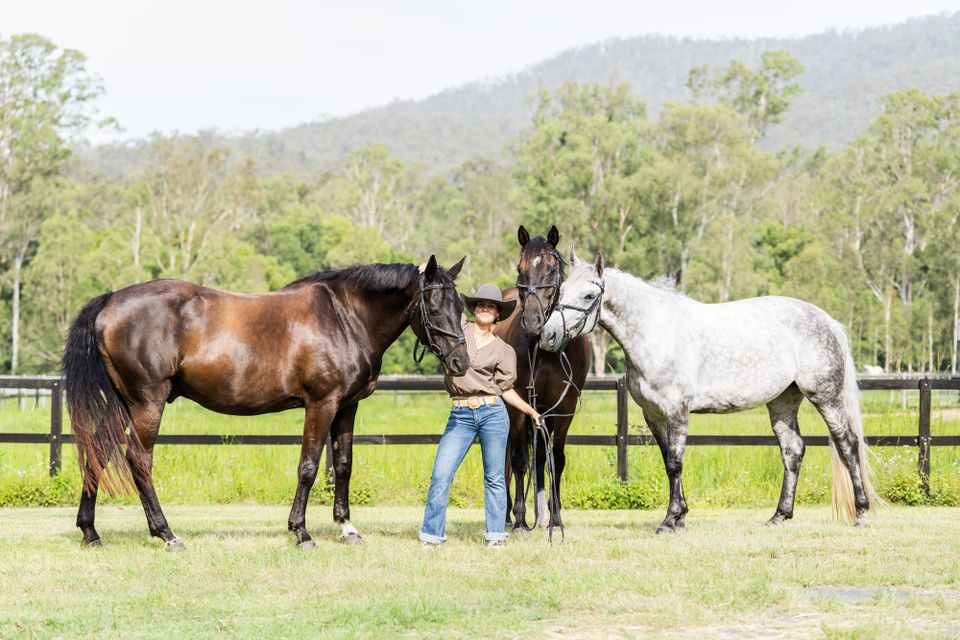
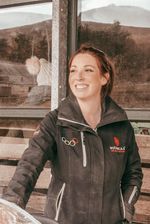
Caitlin Ward is 13 hours a day into two careers before she's finished university, and she wants every teenage girl thinking about quitting to see it.
By Raya | RISE Spotlight
Caitlin Ward's grandmother bought her first riding lesson when she was four. Her parents, both riders as teenagers themselves, had actively tried to steer her elsewhere first, dance, gymnastics, martial arts, AFL, tennis, "and nothing ever stuck." One lesson in, as Ward's dad puts it, his wallet was empty. She had her first pony at nine and found eventing, and the horse that made her competitive, a thoroughbred called Charlie, at thirteen.
Now her alarm goes off before 5am most winter mornings in Tamborine, Queensland, because daylight is short and she has between three and six horses to ride before the rest of her day starts. There's a full-time education degree in there. A shift or two a week at the local tack store. Gym or Pilates. Study. In bed by 8.30pm, if the day has gone to plan.
Ward, who competes and posts as @csw.equestrian, runs a horse training and sales business alongside her riding and her degree, built from a post in local groups offering $30 rides. She's also the reason this piece exists. A reel she shared, citing a statistic on how many teenage girls quit sport by seventeen, is what brought Equitas to her door, and with it, the question Equitas put to her: what does being a healthy role model for young girls in the sport actually mean, day to day.
"I just found that statistic really interesting," Ward says, "and thought this should be more commonly known because the dropout rate in female vs male is wild, and the last genuine reason isn't that they are weak or not capable; it is so much bigger than that." She'd seen the figure first on a reel from an Australian runner she credited in her own post and what struck her was how directly it mapped onto her own sport, where she says the exodus lands at almost the same age, for riders of any gender.
Watching the Drop-Off From Inside It
Ward didn't have to go looking for the pattern. She lived next to it.
She came up through interschool, Australia's grassroots competitive programme for riders aged roughly five to eighteen, representing her school across disciplines. "The second the girls I competed with started graduating, they all quit," she says. Not entirely because of money, she's careful to add, but money was rarely absent from the calculation either. "Horse riding and competing is not cheap. It doesn't matter where you live, it is expensive, and that will never change." For most families, she says, funding a child's riding is a choice made through school years that quietly expires when the child does, at least the version of childhood that had someone else paying. "There is definitely a small majority who, in the end, didn't see a high-level path and couldn't justify spending what they were for the fun of it."
That's the infrastructure question underneath the emotional one, and it's the one Ward keeps circling back to. Not why individual girls lose motivation, but why the sport makes staying in so conditional on a family's ongoing willingness to fund it, at the exact age most young people are also renegotiating everything else: university, work, relationships, who they're going to be.
Ward's own route past that cliff edge ran through a very specific piece of infrastructure: Marcus Oldham College in Victoria, eighteen hours from home, and its equine business management diploma. She hadn't had an answer when Australia's version of school guidance counselling asked fourteen-to-sixteen-year-olds what they wanted to do with their lives. Vet science wasn't for her, she says. Marcus Oldham was. "I moved down, went to this school, had the best twelve months of my life learning and competing with my horse Jett, and came home and started posting in local groups that I was available to ride horses for, at the time, only $30. It has slowly grown since then."
"The mental game of it all"
Two Careers, One Body Clock
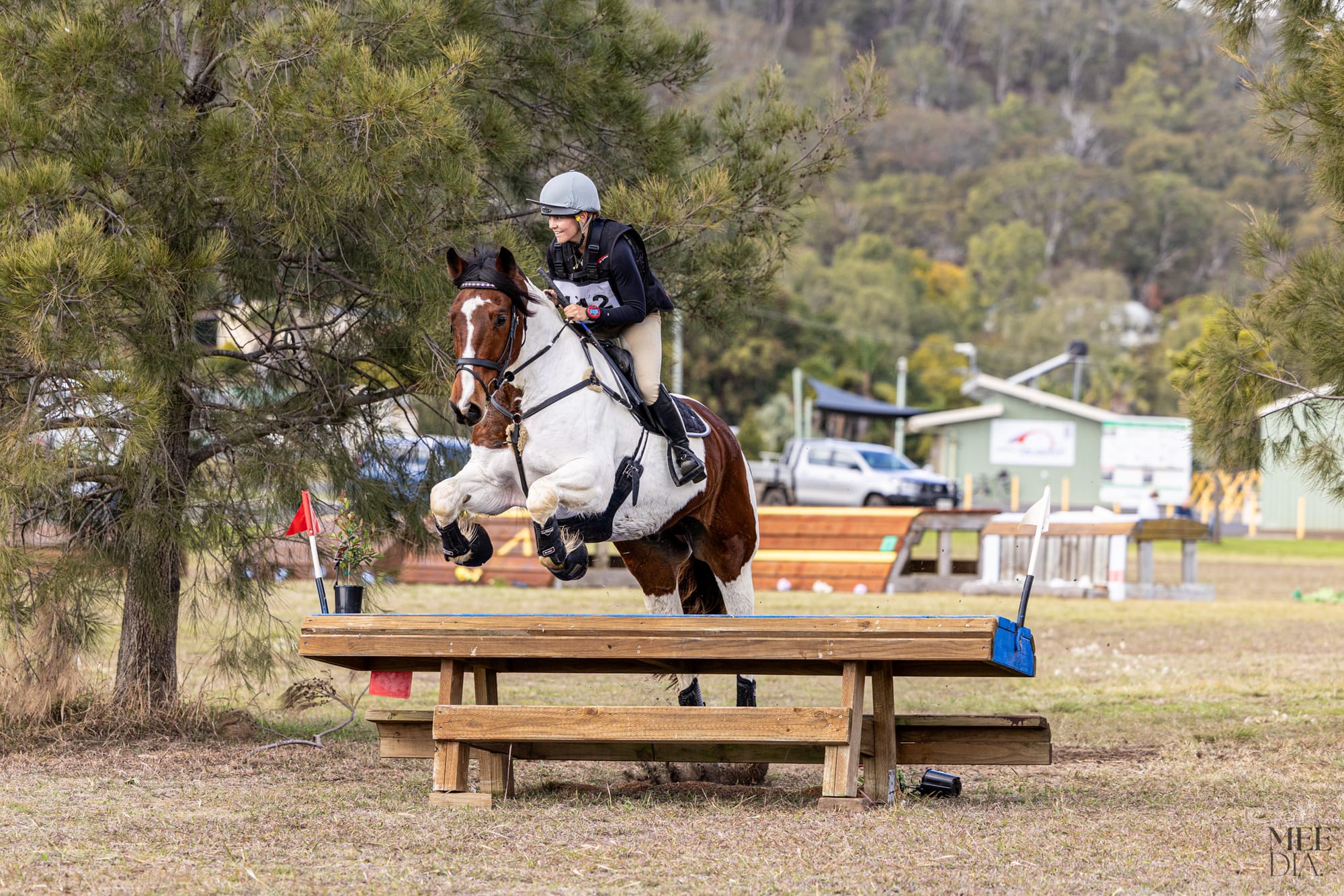
The business is not a side project running alongside the riding. It has become inseparable from it, and inseparable from a university degree Ward is completing at the same time. Ask her what the hardest part of running both well is, and the answer isn't logistics. "Definitely the mental game of it all," she says, "with the self-doubt, trying to learn the line of what is too much and just enough, for not only my own horses but the horse owners who trust me to get on, and myself. i.e., days off."
That line, between discipline and depletion, runs through everything Ward says about the sport. She's blunt that motivation isn't what gets her on a horse at 6am in winter.
"You really think Olympians want to ride every day of the year? Absolutely not, they wake up unmotivated too."
What keeps her there on the days it's cold, wet or simply unglamorous, she says, is closer to devotion than ambition: watching horses she's produced move on to new riders and "teach them everything I taught them and they taught me."
What the Sport Doesn't Say Out Loud
Ward says that competing directly against men and riders decades more experienced, from her early teens onward, has shaped her more than almost anything else. "It has made me stronger mentally and physically. It has given me resilience but also a fire in my belly to be better than the men and the much more seasoned professionals, from the age of 13."
It has also come at a cost she's willing to name specifically - Ward broke her back several years ago. She returned to the saddle four weeks later, sooner than she should have, driven by what she now recognises as invisible, self-imposed performance goals. "I felt immense pressure at the time," she says, "which led me to ride much sooner than I should've."
Being forced into bed rest afterwards, she says, is where she actually learned to cope, not before it.
She's equally direct about body image, an area she says the sport puts real pressure on despite rarely discussing it openly. "I was never the smallest girl in the ring, and social media, and going through teenage years, it is definitely hard to not compare yourself to those super slim, fit riders you see on your screen or at the show." The turn, she says, came out of the injury: from a mindset she describes as "skinny to strong," and a new relationship with the gym that grew out of enforced rest rather than a chosen discipline. She describes deliberately rewriting her own internal script mid-competition day, from "that test was shocking, I can't believe I broke in the walk" to "sure the walk wasn't ideal, but that extended trot he did was the best he has ever done in that movement." Small, repeated reframes, done in real time, rather than one revelation that fixed it.
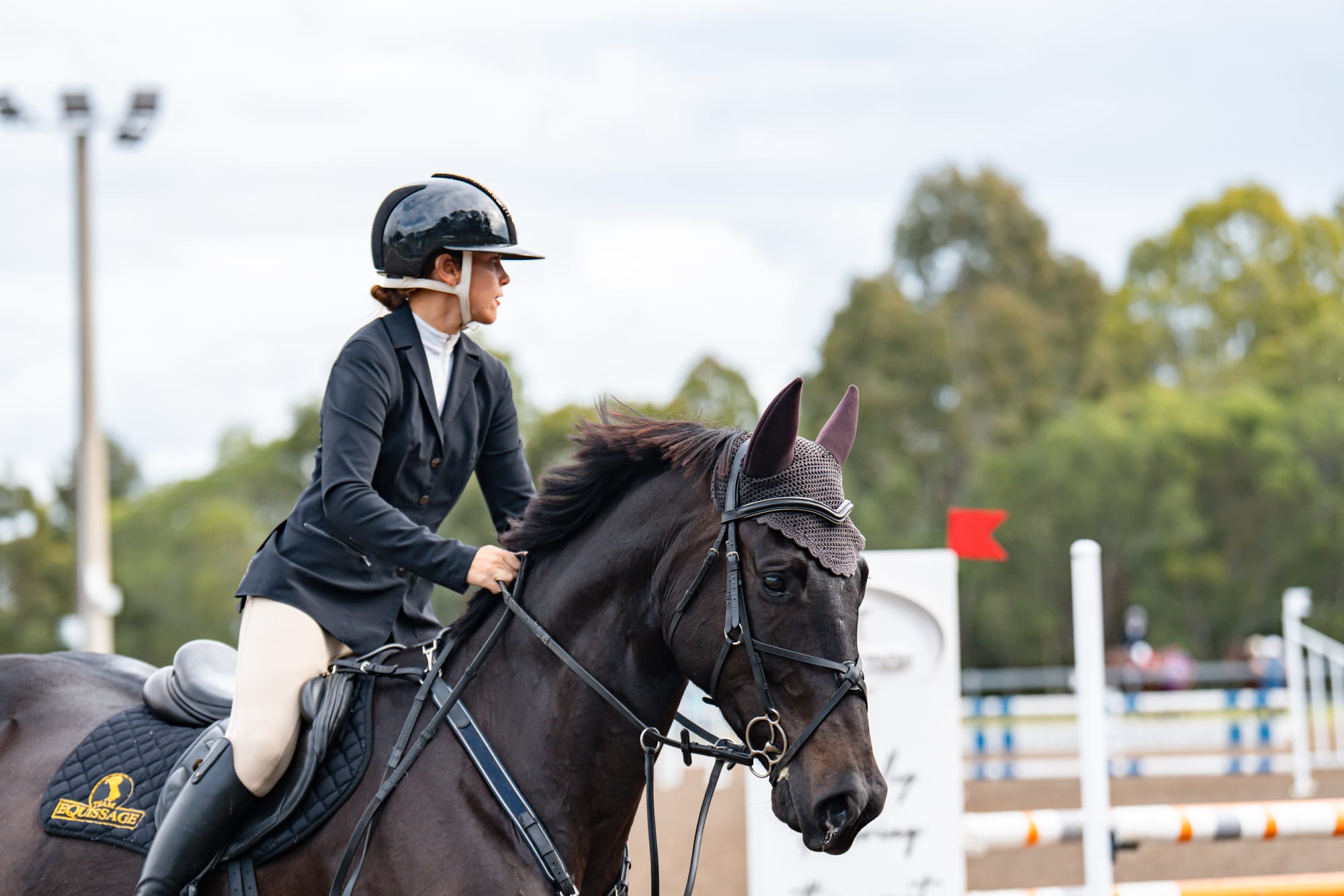
Visibility of a different kind: not a speech, a constant.
The Role Model Question
Asked what being "a healthy role model" actually looks like day to day, rather than as a caption, Ward doesn't reach for anything abstract. "Staying positive even when things aren't going your way, trying not to let one bad ride ruin your whole weekend or day, going to the gym to stay fit, listening to your body for when you need to take a break, eating well. Seeking someone to talk to when life gets heavy. Just promoting all-around health."
She credits her own long-term coach as the person who kept her going through her teenage years, and is precise about what actually did the work. It wasn't a particular pep talk. "It wasn't even anything she has said, it was just knowing that no matter what, she was there to help me and guide me through any rough patch." Visibility of a different kind: not a speech, a constant.
To a teenage girl weighing whether to quit right now, Ward's advice is almost aggressively unglamorous. "Go eat something and take a nap, and if you still feel that way in a month, re-evaluate then." It's the same instinct as her line to her fifteen-year-old self: not a grand reassurance, but permission to wait the feeling out. "I really do wish 15-year-old me could see me now. She would definitely fan-girl over everything I have done and all the mountains I have climbed."
On social media's role in that pipeline out of the sport, Ward holds both sides at once without flattening either. It surfaces role models who "push themselves to climb higher mountains, break PBs and talk about hard things they've experienced," she says, and in the same breath opens the door to "keyboard warriors who all think they know better than the 30-second clip."
What's Next
Ward isn't fixing on twelve-month targets in the way the question usually invites. "I try to not get too fixed on 'goals' so much these days, and try to stay super flexible on those things, especially when it comes to my horses, as things can change in a flash." Success, on her terms, is close to the ground: happy, healthy horses, a business and a set of relationships built slowly rather than forced, and her own name still in the sport at an age when so many of her interschool contemporaries' names have quietly left it.
The reel that started this piece will get a longer hearing on the Equitas podcast down the track. This is the marker for where that conversation begins: a rider still standing at the exact age point where, by her own account, so many others aren't, naming precisely why, and building the infrastructure to make sure her own answer isn't the only one available.
Watch this space.
Follow Caitlin
Instagram: @csw.equestrian
Based in Tamborine, Queensland, Australia: training, sales and competition updates.
AI Driven. Human Led Journalism.