
"Serve Everybody Else Filet, and Put a Peanut Butter and Jelly Sandwich on Their Plate": Linsay Rosser Sumpter on Equal Pay
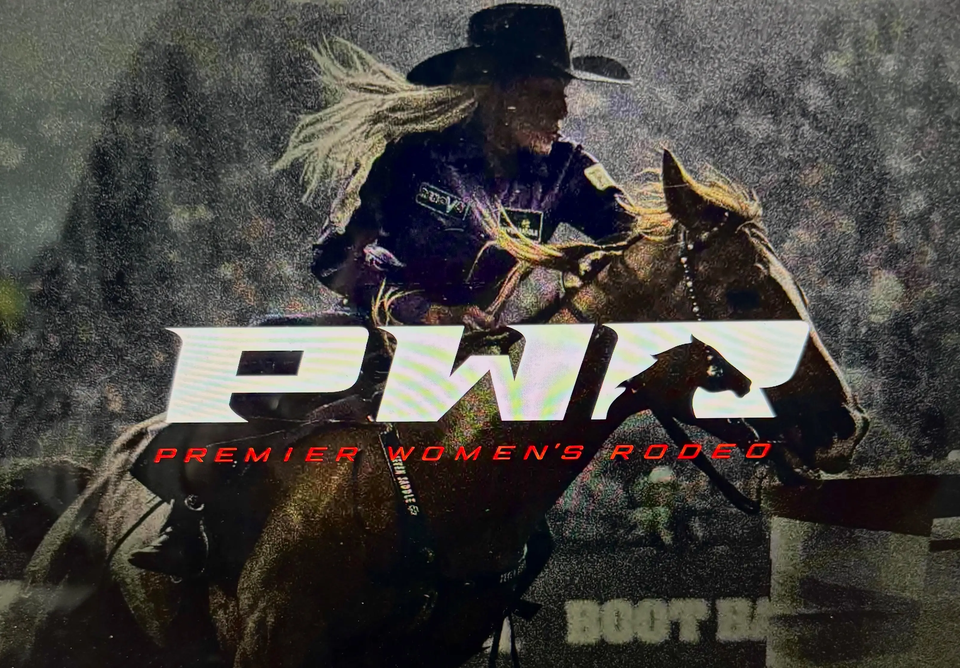
A recent episode of the In Stride podcast has put prize money back on the table. The Commissioner of Premier Women's Rodeo has spent four years building an answer to it, in a corner of the horse world most of us never look at.
Asked about the pushback against paying cowgirls the same as cowboys, Linsay Rosser Sumpter did not reach for a statistic. She reached for a dinner table.
“Would you invite your mother or your sister to a table for dinner, serve everybody else filet, and put a peanut butter and jelly sandwich on their plate? Being excluded for fifty years sounds like a pretty good due pay to me.”
It is the sharpest thing said about equestrian prize money in a long time, and it was said on a rodeo podcast. Sumpter was speaking to Sinead Halpin-Maynard on In Stride, in an episode released on 7 August that traces the history of women in rodeo and what it took to build a platform for them. It deserves an hour of your attention, and not only if rodeo is your thing. What Sumpter is running is a live experiment in something our own industry keeps circling: what actually changes when you pay women properly and then put them on television.
Who she is
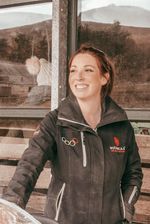
Sumpter is Commissioner of Premier Women's Rodeo, the PBR-owned organisation grown out of the Women's Rodeo World Championship. She is third-generation Rosser, from Marysville, California. Her grandfather Cotton Rosser founded the Flying U Rodeo Company and was among the most recognisable producers in the sport until his death in 2022, aged 93.
That upbringing shapes how she talks about the job. She has described a childhood on the rodeo ground where the work simply was not divided by sex: “There was no job that had a gender orientation,” she told the Team Roping Journal. She backed horses, sorted stock, roped, carried the flag in front of big crowds.
Then she went to college, competed, and hit the wall most women reading this will recognise in one form or another. The competing stopped because the money was not there. She has a degree in Agricultural Science from Cal Poly and a master's in mass communications, spent fifteen seasons as head rodeo coach at Otero College in Colorado, and worked in PR and marketing for the PBR. She still competes in professional breakaway roping. She took the commissioner's role in early 2022.
The argument underneath the analogy
Sumpter's case for equal pay is not about fairness in the abstract. It is about who gets to stay.
“Rodeo is the worst drug in the world. There's no rehab that gets it. Once you get it in your blood, it doesn't go away.”
Read those two lines together, and the economics become clear. Nobody leaves this sport because they stopped loving it. They leave because the arithmetic stops working. Speaking to Ropers Sports News, Sumpter put that in strikingly personal terms: “I don't ever want my son's wives to say that they had to quit after college because there wasn't a chance for them to make money.” Her stated ambition is a sport where fewer women “sell their barrel horses or hang up their rope bag because they can't afford to make a living competing,” and where “you don't have to be a professional cowgirl to have the chance to compete for large prize money.”
There is a second wound she names, and it is one every equestrian woman will know instantly.
“We were always just another additive to the rodeo. We were never the star of the show. And now we have the opportunity to really celebrate these ladies for the athletes that they are.”
The supporting act. The class before the main class. The bit of the programme that runs while the crowd is at the bar.
What she actually built
PWR pays equal purses across every discipline and every classification. It runs a Virtual Rodeo Qualifier, so a competitor earns points from wherever she lives rather than from wherever the circuit happens to travel. Athletes compete across Pro, Challenger and Limited divisions, which means a woman with a good horse, a full-time job and school runs is inside the system rather than locked out of it.
The money followed. PWR and its predecessor events have paid out more than $4.5 million to female athletes. The 2026 Championship in Fort Worth carried a purse of $803,000, making it the richest women-only rodeo event in the world.
Then the part that changes everything else. This year PWR signed a broadcast deal with Scripps Sports, putting women's rodeo on ION and Grit in more than 125 million American homes. From 2027, the networks will carry a minimum of eighteen hours across sixteen broadcasts, including an original series following the road to the championship.
Equal pay. Geography removed. National television.
In that order, and that order matters.
Why this should land hard for us
Equestrian sport has spent decades enjoying a reputation it has not fully earned. We are one of very few Olympic sports where men and women compete directly against one another, in the same classes, for the same prize money. It is genuinely remarkable, and it has become a conversation-ender.
Equal prize money at the summit does very little if women are filtered out long before they reach it.
It should be a conversation-starter, because beneath it the picture is far less flattering. As we set out in The Gender Paradox in Equestrian Sport, women are the overwhelming majority of participants, and a fraction of the elite field, holding roughly 13% of the top thirty showjumping places. Equal prize money at the summit does very little if women are filtered out long before they reach it.
The filter is money, and it is visibility. Sport Ireland's gender balance report found women's sport accounted for just 18% of Irish media coverage in 2025. Print managed 21.4%. Online, the format most of us actually consume, came in under 16%. Only three of the twenty most-mentioned sportspeople in the country were women. Sponsorship follows coverage. Careers follow sponsorship.
Which is precisely why Sumpter's sequencing is worth studying. She did not wait for women's rodeo to prove itself commercially before paying it properly. She put the money in, removed the barriers to entry, and used the resulting product to go and win a broadcast deal. The visibility was engineered, not hoped for.
There is no structural reason equestrian sport could not do the same. The grassroots numbers are already there. The audience is already overwhelmingly female. What is missing is anyone willing to treat women's participation as a commercial asset worth backing ahead of the evidence, rather than a demographic to be marketed to once someone else has taken the risk.
Sumpter, for her part, seems clear about why she is doing it.
“The most impactful light bulb moment for me was realizing that it's always been bigger than me. I'm here for a reason, and this is where I'm supposed to be.”
The filet is on the table. The question is who keeps getting handed the sandwich.
Listen
In Stride — “Linsay Rosser Sumpter: Championing Equality and Opportunity for Women in Rodeo,” hosted by Sinead Halpin-Maynard, released 7 August 2026, approximately 70 minutes.
Listen on Spotify · In Stride on Instagram
Equitas is not affiliated with In Stride, Ride iQ or Premier Women's Rodeo. Quotations are taken from the episode as published by Ride iQ, and from previously published interviews, attributed accordingly.
Sources
- In Stride, episode with Linsay Rosser Sumpter — episode quotes as published by Ride iQ
- Sports Illustrated — Women's Rodeo Breaks Through on National TV With Landmark Scripps Deal
- Sports Illustrated — Meet PWR: The Women's Rodeo Organization Backed by PBR
- Ropers Sports News — Linsay Rosser-Sumpter: The Commissioner is in!
- BarrelRacing.com — Commissioner Q&A: Linsay Rosser Sumpter Shares Her Vision
- Team Roping Journal — Growing up as Cotton Rosser's Granddaughter
- Of The West — The Next Era of Rodeo with Linsay Rosser Sumpter
- The Irish Times — Women's sport received 18% of media coverage in 2025 (Sport Ireland)
- Equitas — The Gender Paradox in Equestrian Sport