
UK equestrian workforce survey: 8/10 have faced or seen misconduct at work
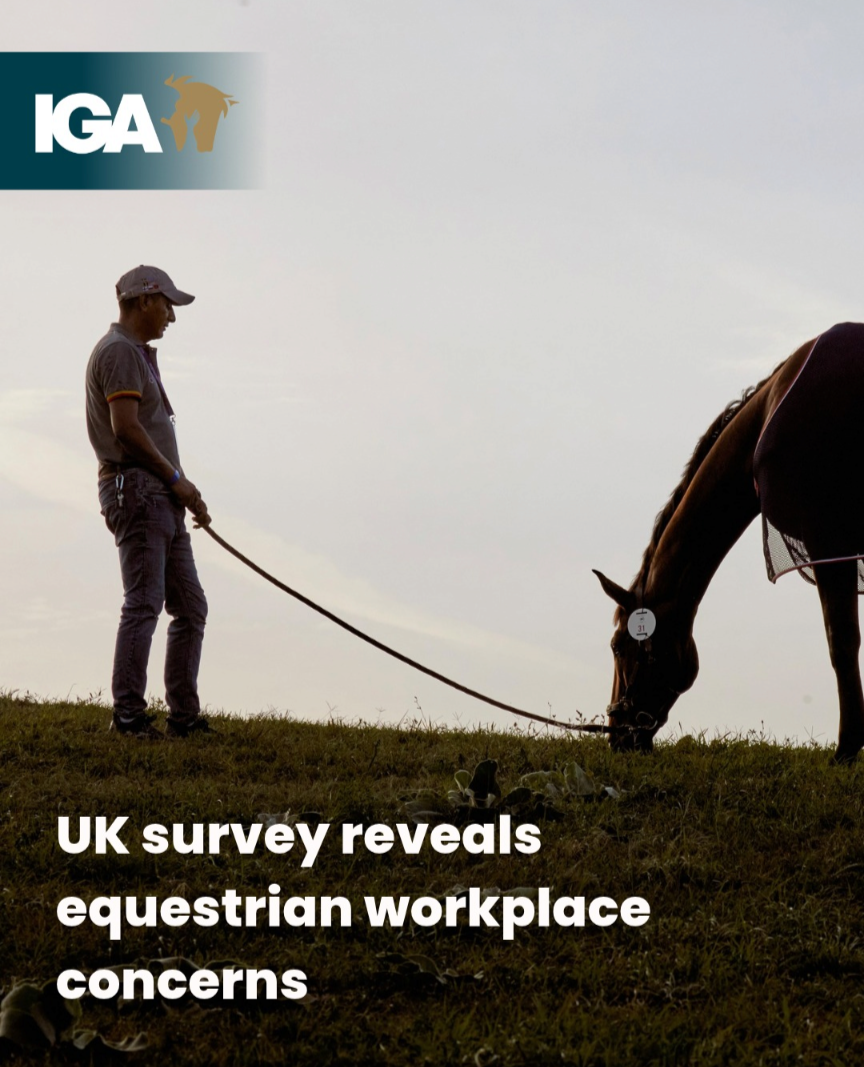
Around eight in ten people answering a UK survey of the equestrian workforce have experienced or witnessed at least one form of prohibited conduct during their career. The findings were published on 19 November by British Equestrian, the British Grooms Association (BGA) and the Equestrian Employers Association (EEA), during Good Employment Week.
The Equestrian Workforce Behaviours Survey was launched in November 2025 and stayed open for three weeks. It was anonymous, open to the paid workforce aged 18 and over, and designed with Dr Eleanor Boden, a leading researcher on the racing industry. Of 519 people who answered at least one question, 337 completed it. Employees made up 45% of respondents, self-employed freelancers 41% and employers 14%.
Bullying sits at the top of the list
The survey’s list of prohibited conduct runs from poor practice and unequal treatment to physical, emotional and sexual abuse, and bullying stood out. In all, 33.8% of employees and 31.9% of self-employed respondents had experienced it directly, and 51.8% of respondents had witnessed it.
The report sets this against a figure of around 15% for UK employees generally, from Chartered Institute of Personnel and Development research published in January 2020. That figure covers bullying experienced over the previous three years, while the equestrian survey asked about a whole career, so the gap is better read as a signal of scale than a like-for-like measurement.
The money and the paperwork
Nearly a third of employees and self-employed workers had experienced unequal pay for the same role or unpaid overtime, and nearly half of freelancers were expected to work additional hours without pay. More than 30% of employees said they had no contract of employment, and almost 70% of self-employed workers had no written agreement with their clients.
For live-in roles, one finding stands out: workplace benefits such as on-site accommodation were correlated with a higher risk of experiencing prohibited conduct, including behaviour between colleagues.
Tolerated, and rarely reported
Some 65.3% of respondents said they rarely or never felt unsafe at work because of someone else’s behaviour, even though most had experienced some form of prohibited conduct. The report reads this as tolerance of behaviour people recognise as inappropriate. More than 80% of respondents did not know British Equestrian had a reporting facility, and most would rather tell a friend about a concern than the police, their employer, a coach, their member body or British Equestrian.
The top three barriers named by employees and the self-employed were fear of negative consequences, worry about future employment and a lack of confidence that anything would be done.
What the published summary does not tell us
Sexual harassment was in the survey’s scope at launch, and the published summary gives one figure in this area: 2.4% of employees and 2.7% of self-employed workers reported experiencing or witnessing unwanted sexual acts or pressure or manipulation into sexual behaviour. The report describes this as significantly below the national average, citing a Government Equalities Office survey from 2020 in which 29% of people in employment had experienced at least one form of workplace sexual harassment in the previous 12 months.
Those two figures measure different things. The equestrian figure covers physical sexual behaviour, counts people who experienced or witnessed it, and is not limited to the past year. The national figure covers any form of sexual harassment, including verbal and online, and counts only people who experienced it in the previous 12 months. The summary itself names verbal boundary-crossing as a possible systemic issue, but it does not publish a separate figure for non-physical sexual harassment, and it does not break any result down by gender.
What happens next
The independent analysis produced nine recommendations, including clearer reporting channels, support for employers on their legal duty under the Equality Act to take reasonable steps to prevent sexual harassment, and awareness of fair pay and written agreements. British Equestrian launched a reporting hub in July 2026, and a federation-wide awareness campaign is being planned.
“While some of the findings are encouraging, there are areas within the report that are disappointing to read,” said Jim Eyre, CEO of British Equestrian.
Lucy Katan MBE, CEO of the British Grooms Association and the Equestrian Employers Association, said: “Everyone deserves to feel safe, respected and valued at work, and we all have a part to play in making that a reality.”
How to get support or report a concern
If this has affected you, or you are worried about something happening at a yard, start with EQUISS. It offers free, confidential and independent safeguarding support for anyone in equestrian sport in the UK and Ireland, and can help you report a concern.
- Call: 08000 308 800 (UK) or +44 8000 308 800 (from Ireland), Monday to Friday, 8.30am to 4.30pm
- Email: helpcentre@equiss.org.uk
- Online: equiss.org.uk
EQUISS is Equitas's Safeguarding Partner for the UK and Ireland.
In Britain, you can also use British Equestrian's Report a concern hub, email integrity concerns to report@bef.co.uk, call the British Equestrian office on 02475 313 443, or report to your own member body. Outside the UK, grooms should check their own national federation's reporting route.
If someone is in immediate danger, call 999 or 112.