
We Talk About Accessibility. But What Is the Reality?
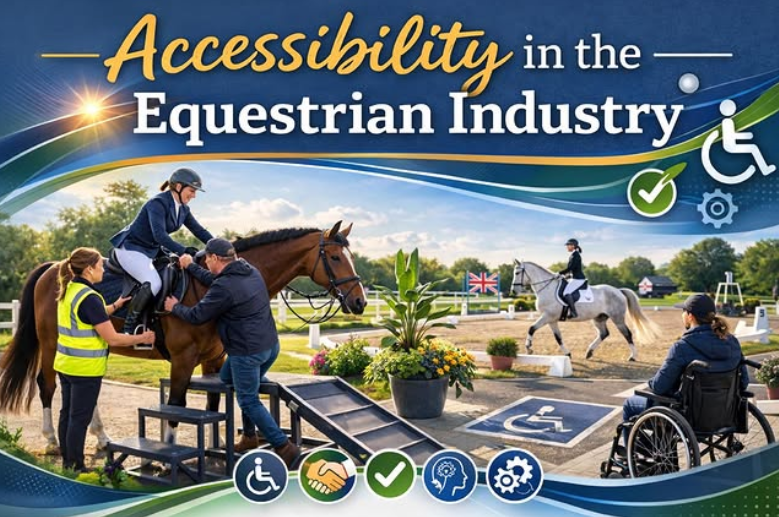
This piece is published and promoted on behalf of Equitas contributor and para equestrian Vicki Hoban (@vickihobanparaequestrian), who brought this survey and its purpose to our attention.
Equestrian sport loves to say it’s inclusive.
We say horses are for everyone. We talk about community. We post the right captions during the right awareness weeks.
But when you’re a disabled rider, the reality of “inclusion” often looks like something else entirely: navigating a system that expects you to constantly explain yourself.
Explain adaptive tack.
Explain why you might need to leave an arena early.
Explain why reasonable adjustments aren’t “advantages.”
Explain that being unclassified doesn’t mean being undeserving.
For years, para riders and disabled equestrians have been doing more explaining than riding - not because they want to, but because the sport still lacks consistent structures, clear pathways, and basic accessibility standards.
And one thing has become painfully obvious:
We talk about inclusion in equestrian sport.
But we rarely measure it.
The gaps aren’t theoretical
Disabled riders across disciplines have shared stories that sound different on the surface, but familiar underneath: inconsistency.
- Competitions with no safe mounting provision.
- Stewards questioning equipment that has already been approved.
- Riders with intellectual, fluctuating, or invisible disabilities unable to find any viable pathway.
- “Well-meaning initiatives” that become token gestures because there is no framework behind them.
- Venues that look accessible on paper, until you arrive and realise access depends on weather, ground conditions, or whether someone feels like helping.
Some experiences are positive. Many are difficult. Most are inconsistent.
And that inconsistency is the problem - because access in sport should not depend on which venue you attend, which official is on duty, or how confident you are at advocating for yourself.
So Vicki is doing something different: collecting evidence
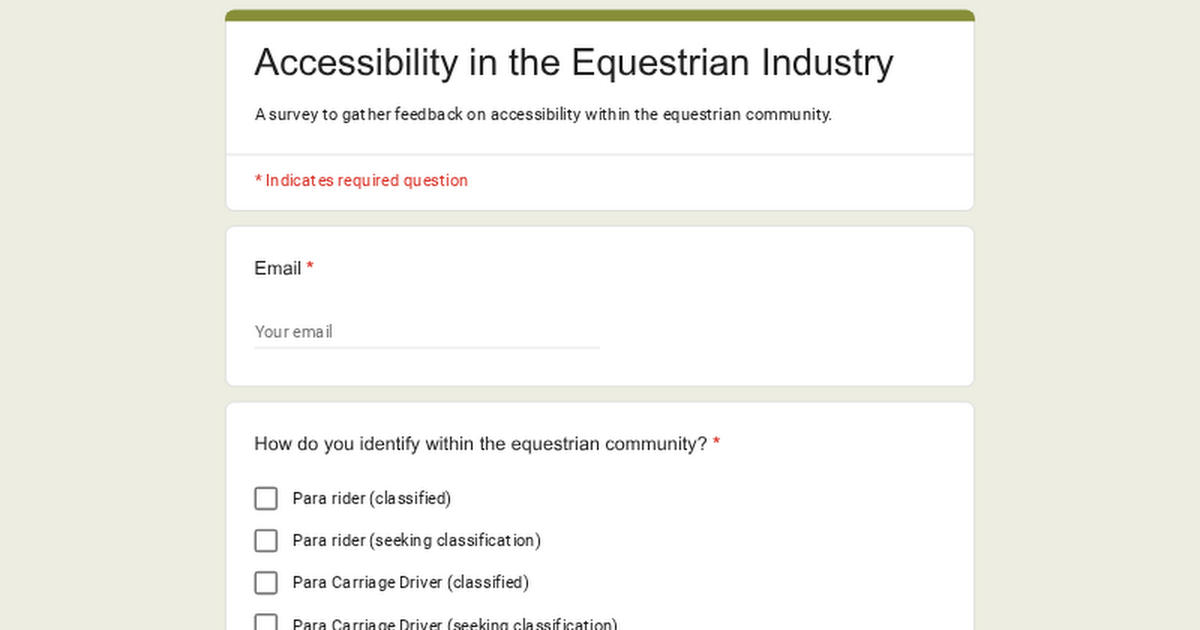
Instead of another opinion piece, a structured survey has been created to measure the current state of accessibility in equestrian sport - across multiple roles, experiences, and levels of involvement.
This survey is led by Vicki Hoban (Instagram: @vickihobanparaequestrian) - a para rider who has spent years navigating the sport, not just as a competitor, but as someone repeatedly expected to justify her needs.
The aim is simple:
To turn lived experience into data.
What the survey covers
The survey explores:
- Physical access (including safe mounting provision)
- Classification pathways
- Opportunities for non-classified riders
- Steward and official training
- Social inclusion and culture
- Whether governing bodies are moving forward — or backwards
It takes under 10 minutes.
And it is not about attacking anyone.
It’s about understanding the reality on the ground, and creating a baseline we can actually work from.
Who should fill it out?
If you are involved in equestrian sport in any capacity, your perspective matters.
That includes:
- Riders (disabled and able-bodied)
- Parents and guardians
- Coaches and trainers
- Stewards and officials
- Show organisers
- Volunteers
- Spectators and support teams
Accessibility isn’t only a “para rider issue.” It’s a sport-wide responsibility - and the people who see the cracks most clearly are often the ones working around them every weekend.
Why this matters now
If the sport is serious about inclusion, then accessibility can’t be optional. It can’t be a nice extra. And it can’t be left up to individuals to negotiate, request, justify, and fight for each time.
And it’s about making sure the next generation of riders doesn’t have to fight the same battles just to participate safely and fairly.