
Well known does not mean safe: power, trust and safeguarding in equestrian sport
On 5 November 2026, a London jury found Russell Brand guilty of one count of rape and three counts of sexual assault, in a case dating back more than 20 years. He was acquitted of three other charges, and denied all of them throughout the trial.
The case has been about one man and the women who came forward. But it has also started a wider conversation about the power that fame, influence and position can give a person, and what happens when that power is abused. That conversation belongs in equestrian sport too.
Power exists in every yard
Our sport runs on trust. Parents hand their children to coaches. Young riders depend on trainers, selectors and yard owners for their next opportunity. Grooms and working pupils often live where they work, and rely on one employer for their wages, their home and their reference. Owners, sponsors and officials can open or close doors.
None of that is wrong in itself. Most people in those roles use their position well. But wherever one person holds that much influence over another, there is room for it to be misused, and the more respected or successful someone is, the harder it can be for anyone to question them.
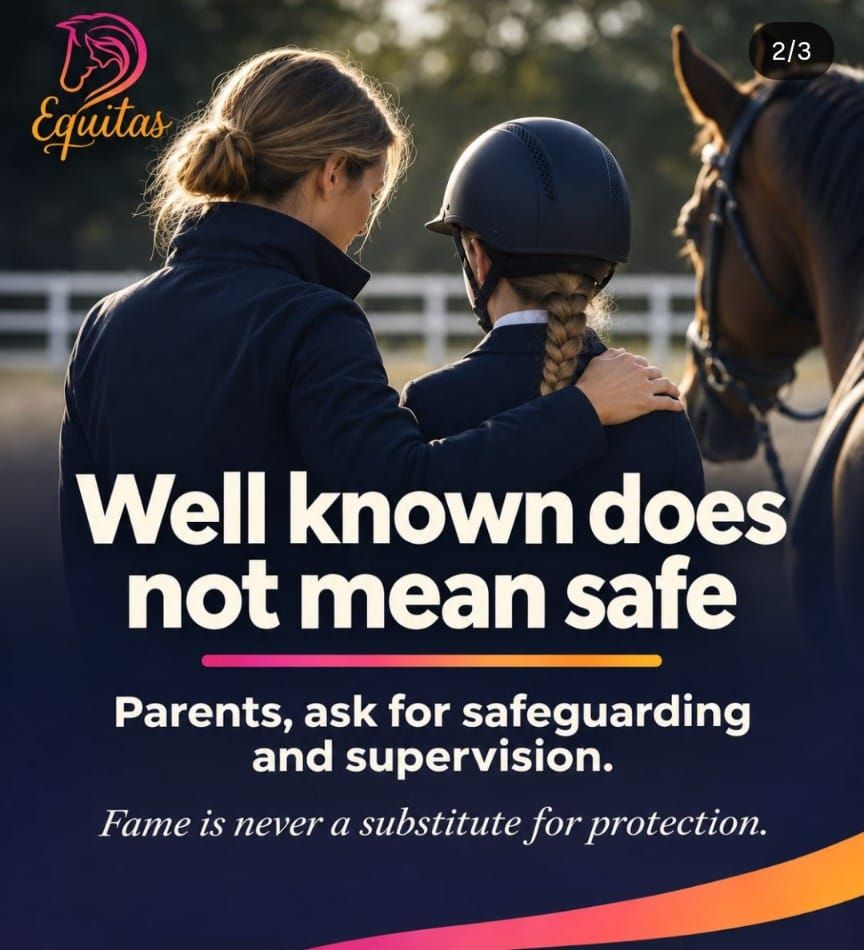
Well known does not mean safe
A big name, a strong competition record or years in the sport are not safeguarding. They are reasons people give for not asking questions.
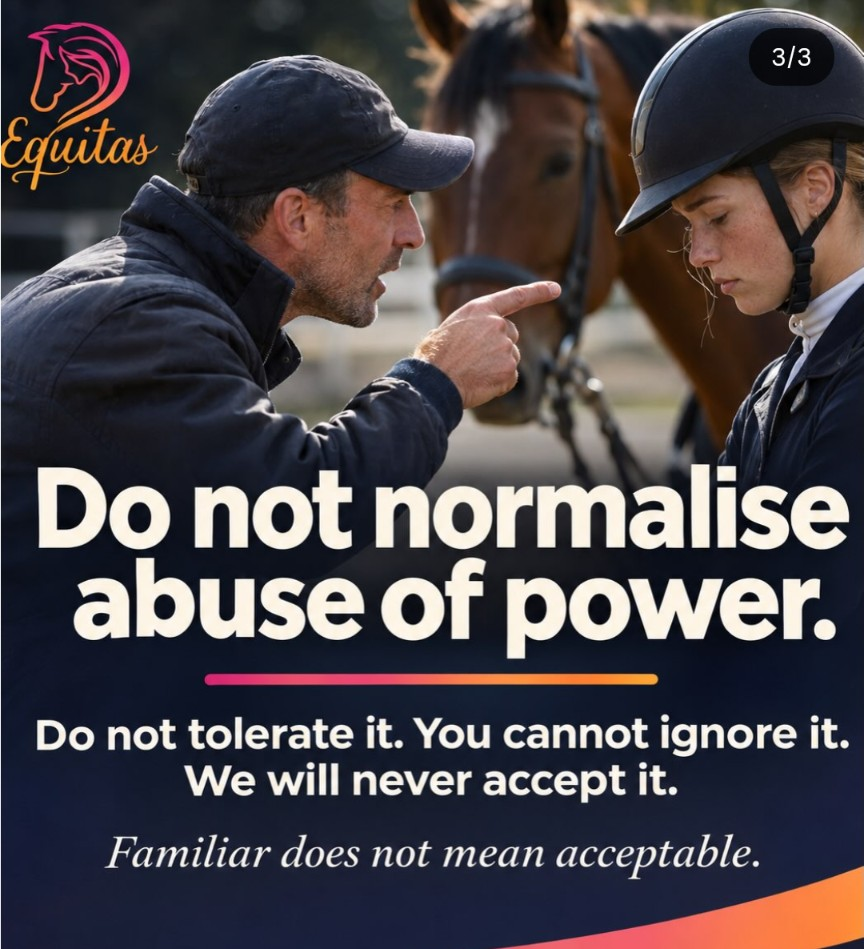
Abuse of power rarely starts with something obviously criminal. More often it looks like behaviour that gets explained away: shouting and humiliation dressed up as "old school" coaching, a trainer who wants to be the only adult a child confides in, an employer whose staff are afraid to speak up, or a culture where everyone knows about someone and nobody says anything because of who they are.
Familiar does not mean acceptable.
What parents can ask
Parents should never feel awkward about asking how their child is kept safe. Good coaches, clubs and yards welcome these questions:
- Who is the safeguarding officer here, and how do I contact them?
- Is everyone working with children vetted (Garda vetting in Ireland, DBS checks in the UK) and safeguarding-trained?
- How are lessons and travel supervised? Are children ever alone with one adult, and why?
- How do coaches communicate with my child? Messages should go through group chats or include a parent, not private one-to-one messages.
- What happens if my child raises a concern? Is there a written policy, and who outside the club can we go to?
If the answers are vague, or you're made to feel difficult for asking, that tells you something too. Put your child's safety before anyone's sporting reputation.
For riders, grooms and staff
Adults are affected too. If you're being intimidated, manipulated, harassed or threatened by someone who holds power over your riding, your job or your horse, it is not part of the job, and it is not something you have to absorb to get on.
- Write down what happened, when, and who was there.
- Keep messages, emails and screenshots.
- Tell someone you trust.
- You can report without going through your club or governing body first.
Where to go
EQUISS is the independent safeguarding organisation for the equestrian community across the UK and Ireland, and Equitas's official Safeguarding Partner. You can report anyone to them, whatever their profile.
- Phone: 08000 308 800 from the UK, or +44 8000 308 800 from Ireland. The free, confidential line is open Monday to Friday, 8.30am to 4.30pm.
- Email: helpcentre@equiss.org.uk. The safeguarding team will contact you within 72 hours.
If someone is in immediate danger, or you want to report a crime, contact the Gardaí or the police on 999 or 112.
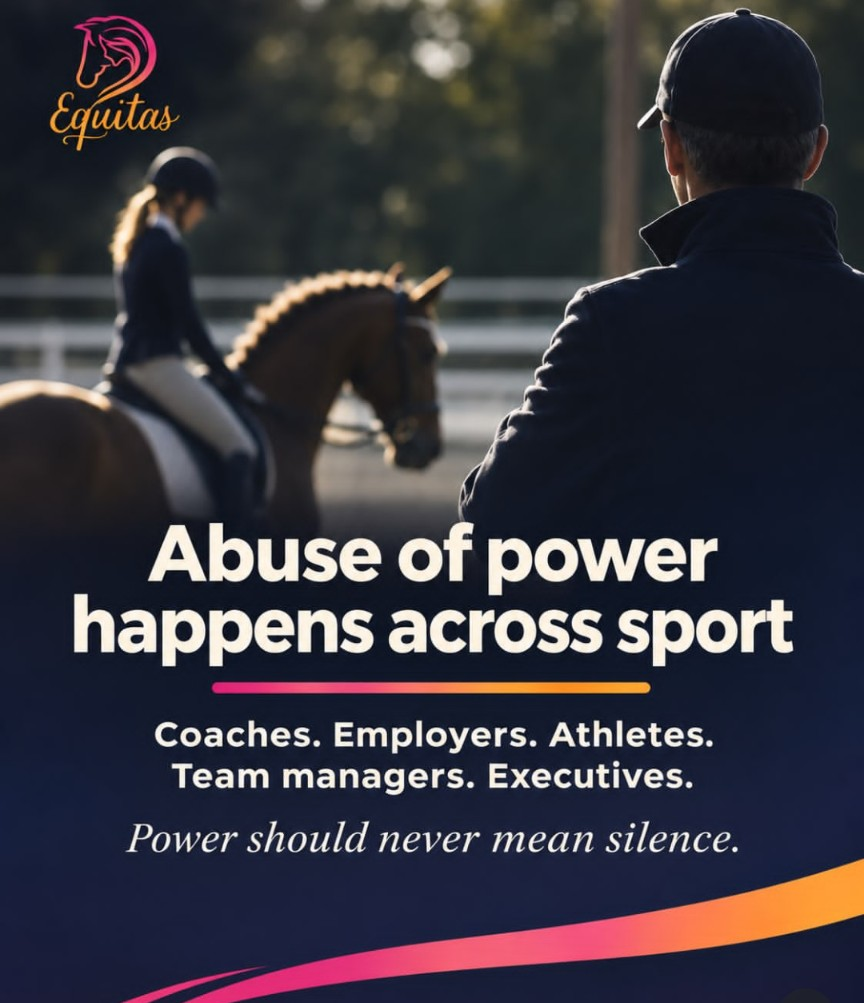
Power should never mean silence
We have a collective responsibility to challenge manipulation, intimidation and abuse of power wherever it happens, whoever is involved. Reputation, success and public recognition should never place anyone beyond scrutiny.
Do not tolerate it. You cannot ignore it. We will never accept it.